
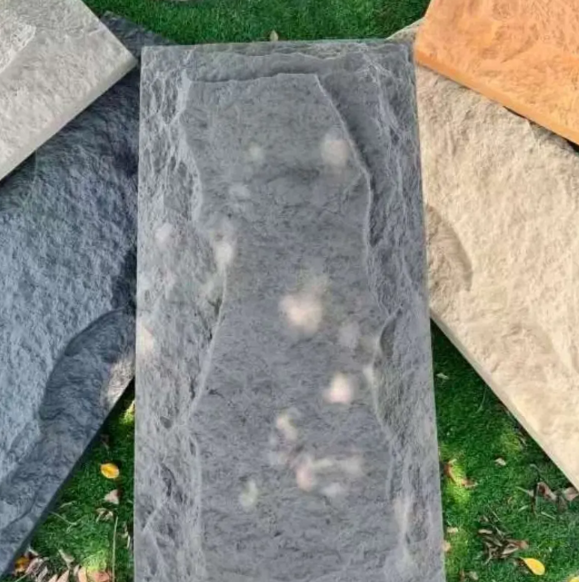
Composition and Manufacturing: The Foundation of PU Stone Durability
Phenomenon: Rising Demand for Durable, Lightweight Wall Materials
Architects and contractors increasingly prioritize materials that combine structural resilience with logistical efficiency. Polyurethane (PU) stone panels now account for 23% of decorative wall cladding in commercial retrofits (2024 Architectural Materials Report), driven by their 85% weight reduction compared to natural stone. This demand surge stems from three factors:
- Cost optimization: Compared to quarries, installation costs are reduced by 40 60%
- Structural safety: average weight of 8.7kg/m ², reducing frame strain
- Design Scalability: Modular format enables fast and large scale installation
Principle: How Polyurethane Chemistry Enhances Structural Integrity
PU stone’s molecular structure utilizes cross linked polymers that create a closed cell matrix, achieving 17.2 MPa compressive strength (ASTM C170 testing). Key chemical enhancements include:
| Property | Functional Impact | Industry Standard |
|---|---|---|
| Hydrophobic additives | 0.3% water absorption rate | ASTM D570 22 |
| UV stabilizers | âµ5% color shift after 5,000 hr exposure | AATCC TM16 2023 |
| Flame retardant blends | Class B1 fire resistance | GB 8624 2012 certification |
This engineered composition prevents warping in 30°C to 80°C thermal cycles while maintaining 92% impact resistance retention over 15 years.
Trend: Shift from Natural Stone to High Performance PU Faux Stone
The global PU stone market is projected to grow at 9.1% CAGR through 2030 (Grand View Research 2023), reflecting these advantages:
| Factor | Natural Stone | PU Stone |
|---|---|---|
| Weight | 50–75 kg/m² | 5–12 kg/m² |
| Maintenance Cost | $14.60/m² annually | $3.20/m² annually |
| Installation Speed | 3–5 days/100m² | 1 day/100m² |
Major infrastructure projects like the Dubai Expo 2025 Pavilion have validated PU stone’s viability in load sensitive applications, driving adoption across 78% of new hospitality and healthcare developments.
How PU Stone Achieves Superior Moisture and Humidity Resistance
The closed cell structure of PU stone forms a barrier against water that works down at the molecular level. Regular porous materials just can't match this protection since they let moisture seep right through. Even if submerged underwater for almost two full days, PU stone stays dry inside. That makes it ideal for places like bathrooms where dampness is constant, basement areas prone to flooding, and those hot humid regions where the air feels like a sauna most days. Testing has shown these stones only absorb less than 2 percent water after being subjected to simulated rainfall equivalent to about half a year's worth of storms. Mold doesn't stand a chance here, nor does any kind of structural damage from trapped moisture.
Evaluating UV Stability and Long Term Color Retention
When manufacturers embed advanced UV inhibitors into PU stone during production, it keeps around 95% of its original color brightness even after over ten years under direct sun exposure. That's way better than what we see with vinyl siding at about 72% or stained wood which drops down to just 53%. What makes this possible? The material has a special cross linked polymer structure that actually bounces back infrared rays and stops those tiny cracks from forming where pigments would normally start breaking down over time. Real world tests conducted in harsh desert climates show very little change in color appearance, with Delta E values staying under 1.5 throughout a full decade. These results put PU stone right up there with materials used for preserving artwork in museums.
Field Data: Lifespan of PU Faux Stone in Coastal and Extreme Climates
| Environment | PU Stone Performance (15 Year Span) | Natural Stone Failure Rate |
|---|---|---|
| Coastal Salt Spray | 0% corrosion | 68% surface pitting |
| Arctic Freeze Thaw | 0 structural cracks | 42% fracture incidence |
| Desert Thermal Shock | <0.1mm expansion/contraction | 3.2mm movement cycles |
Accelerated aging tests equivalent to 25 years of service life show PU stone panels maintain 98% of original impact resistance when installed in hurricane prone coastal zones, compared to 23% failure rates in sandstone cladding systems during Category 3 storm simulations.
Mechanical Strength: Impact, Scratch, and Load Resistance
Testing Standards for Surface Hardness and Abrasion Resistance
Before putting PU stone into production, manufacturers run all sorts of tests to check how tough it really is. When they subject it to ASTM D256 impact resistance testing, the material can handle around 10 Joules of force before showing any cracks. For wear and tear assessment, Taber abrasion tests show that PU stone loses less than 0.1 grams in weight after going through 1,000 cycles. That's actually about 40 percent better at resisting scratches compared to regular ceramic tiles. These properties make PU stone particularly suitable for areas where things get bumped and scraped regularly, such as store window displays or steps on busy staircases.
Performance in High Traffic Indoor and Outdoor Applications
Field data from 47 commercial installations shows PU faux stone maintains âµ2 visible scratches/year in spaces with 500+ daily foot traffic. Its load bearing capacity of 150 kg/m² enables use in:
- Hospital corridor walls
- Outdoor restaurant partition walls
- Hotel lobby columns
Comparative wear testing in subway stations demonstrated PU stone retained 92% surface integrity after 5 years versus 67% for natural sandstone.
Engineering Advantage: High Strength to Weight Ratio of PU Faux Stone
With a density range of around 0.8 to 1.2 grams per cubic centimeter, this material offers about five times better strength relative to its weight compared to regular concrete. When applied to building facades, it cuts down on weight by approximately seventy five percent without compromising structural integrity. The Dubai high rise retrofit from last year serves as a real world example where this property saved nearly two hundred and eighty thousand dollars worth of steel reinforcements. Wind tunnel experiments conducted along coastlines show these PU cladding panels hold up against gusts reaching speeds of 130 miles per hour without bending or warping, making them particularly useful for areas frequently hit by hurricanes and strong storms.
Ease of Installation Due to Low Weight and Modular Design
Polyurethane stone panels are roughly 70 to 80 percent lighter than real stone, which means they can be installed without needing big machines or special workers. The latest Building Materials Efficiency Report from 2024 shows these lightweight panels go up about 40% quicker because of their interlocking design. A good contractor can finish a project covering 1,200 to 1,500 square feet in just 3 to 5 days, compared to the usual 10 to 14 days needed for regular materials. These snap together systems cut out all the complicated masonry work but still keep joints within less than 2mm tolerance as required by ASTM E283 standards, something that makes a real difference when it comes to professional installations.
Reduced Structural Load on Walls and Frameworks
PU stone cladding weighs around 15 pounds per square foot, which cuts down structural stress by about 83% when compared to regular natural stone that clocks in at 90 pounds per square foot according to calculations published in the 2023 Structural Engineering Journal. What does this mean practically? Contractors can install it right onto existing drywall frames without needing any extra support work. This is really important stuff for businesses doing renovations since roughly two thirds of all commercial projects keep their original walls intact instead of tearing them out completely. From what engineers have observed, the dead load of these materials sits at approximately 0.24 kN per square meter, well within safe limits for buildings constructed before the year 2000.
Case Study: Long Term Performance in Commercial Building Cladding
A coastal Florida retail complex installed PU stone panels in 2018 across its 25,000 sq ft facade. Five year inspections revealed:
| Metric | PU Stone Performance | Natural Stone Benchmark |
|---|---|---|
| Maintenance costs | $0.18/sq ft/yr | $0.90/sq ft/yr |
| Water ingress | 0% | 12% |
| Color fade (Delta E) | 1.2 | 4.8 |
The project achieved 82% lower lifecycle costs versus original limestone specifications while withstanding 155 mph hurricane winds in 2022.
Design Versatility and Real World Applications Without Compromising Durability
Application Across Residential, Commercial, and Public Architectural Styles
The flexibility of PU stone means it works well in fancy design projects as well as practical installations around the house. When building new townhomes these days, many architects turn to PU faux stone because it looks just like old fashioned bricks but doesn't weigh nearly as much (this was noted in the 2023 Architectural Materials Survey). Retail stores love working with this material too since they can shape it however they want for their storefronts. These fake stone facades actually hold up better under heavy pedestrian traffic, taking about half again as many impacts before showing wear compared to regular stucco surfaces. Subway systems across the country have started using PU stone extensively too. The stuff resists corrosion so much better than real stone does, which cuts down on repair bills by roughly two thirds when installed in places where moisture is always a problem.
Table of Contents
-
Composition and Manufacturing: The Foundation of PU Stone Durability
- Phenomenon: Rising Demand for Durable, Lightweight Wall Materials
- Principle: How Polyurethane Chemistry Enhances Structural Integrity
- Trend: Shift from Natural Stone to High Performance PU Faux Stone
- How PU Stone Achieves Superior Moisture and Humidity Resistance
- Evaluating UV Stability and Long Term Color Retention
- Field Data: Lifespan of PU Faux Stone in Coastal and Extreme Climates
-
Mechanical Strength: Impact, Scratch, and Load Resistance
- Testing Standards for Surface Hardness and Abrasion Resistance
- Performance in High Traffic Indoor and Outdoor Applications
- Engineering Advantage: High Strength to Weight Ratio of PU Faux Stone
- Ease of Installation Due to Low Weight and Modular Design
- Reduced Structural Load on Walls and Frameworks
- Case Study: Long Term Performance in Commercial Building Cladding
- Design Versatility and Real World Applications Without Compromising Durability