
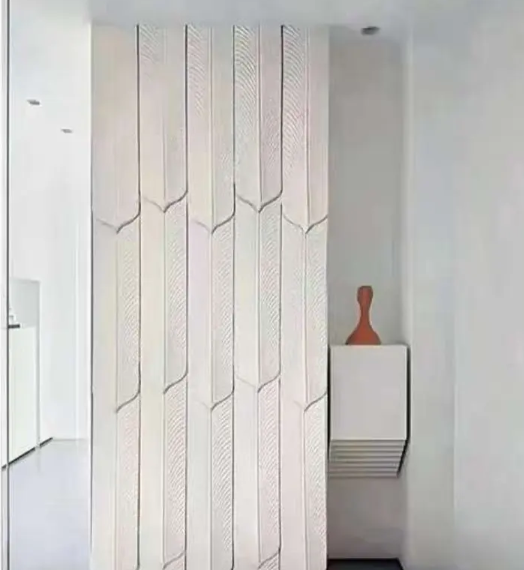
Upfront Cost Savings: PU Faux Stone Panels vs. Natural Stone
Material Unit Cost Comparison and Bulk Procurement Advantages
PU faux stone panels deliver immediate material savings, averaging $5–$20 per sq. ft., up to 70% less than natural stone ($15–$50 per sq. ft.). Standardized manufacturing minimizes waste and enables scalable production–allowing contractors to leverage volume discounts on large commercial orders without sacrificing design versatility or surface realism.
Weight-Related Logistics, Handling, and Storage Cost Reductions
Weighing just 0.5–2 lbs/sq. ft.–versus 12–25 lbs/sq. ft. for natural stone–PU panels cut hidden project costs across the supply chain:
- Freight expenses drop by up to 40% due to dramatically lower shipping weight;
- On-site handling requires no cranes or specialized labor, reducing crew size and equipment rentals;
- Storage density improves by 300%, optimizing warehouse space and staging efficiency. Collectively, these advantages reduce overall project overhead by 25–35% compared to natural stone installations.
Data aggregated from industry material benchmarks (2025).
Installation Efficiency and Labor Cost Reduction with PU Faux Stone Panels
Faster On-Site Installation Due to Lightweight Design and Interlocking Systems
Polyurethane faux stone panels really speed up installation times, cutting them down anywhere from 60 to 85 percent. For example, what would normally take 3 to 5 weeks for real stone can be done in just 1 to 3 days when working with these panels on a 500 square foot facade. Weighing in at around 2 to 3 pounds per square foot, they're roughly 80 to 90 percent lighter than actual stone. This makes them much easier to work with since they don't require heavy tools. Installers can simply snap them together or use low VOC adhesives. Small crews typically manage to put up between 100 and 150 square feet each day, which means they produce three times as much as traditional masonry teams. The labor costs drop dramatically too, going from about $15 to $30 per square foot for natural stone down to just $5 to $10 per square foot with these synthetic alternatives. Contractors love this because it saves both time and money without compromising on appearance.
| Installation Factor | Natural Stone | PU Faux Stone Panels | Improvement |
|---|---|---|---|
| Weight (lbs/sq.ft) | 15–20 | 2–3 | 85% lighter |
| Daily Coverage (sq.ft) | 25–40 | 100–150 | 3× faster |
| Labor Cost ($/sq.ft) | $15–30 | $5–10 | 67% savings |
| 500 sq.ft Timeline | 3–5 weeks | 1–3 days | 85% faster |
Lower Structural Reinforcement Needs and Associated Engineering Costs
Polyurethane panels weigh less than 10% of natural stone, so they usually don't need extra structural support. This saves money on things like engineering assessments, load bearing changes, and substrate work that can cost anywhere from $20 to $50 per square foot. Stone veneer is different though it requires all sorts of load calculations and sometimes even foundation work before installation. PU panels just attach right to regular sheathing materials or whatever cladding already exists on buildings. The whole process makes architectural reviews much easier and gets permits approved faster. Contractors have seen around a 30% drop in overall project costs when using these panels for commercial building renovations according to industry reports from last year.
Long-Term Value: Maintenance, Durability, and Lifecycle Cost of PU Faux Stone Panels
PU faux stone panels combine exceptional longevity with near-zero upkeep–making them a high-value, low-risk cladding solution for residential and commercial builds alike.
Weather Resistance, UV Stability, and Warranty Coverage (15–25 Years)
These panels are made from really good quality UV stabilized polyurethane that just doesn't fade away or crack even when exposed to harsh conditions. We're talking about places where there's constant sunlight, freezing temperatures followed by thawing cycles, or salty air near coastlines. Independent tests have shown these materials keep their color pretty well too. According to some recent studies from 2024, they retain around 90 percent of their original color after being out in direct sunlight for ten whole years. Most companies actually stand behind their products with pretty solid warranties ranging between 15 to 25 years. These cover issues like warping, layers coming apart, and those pesky UV related damages. That kind of warranty is way better than what we usually see for brick veneer which typically only comes with a standard five year guarantee.
20-Year Total Cost of Ownership vs. Natural Stone and Brick Veneer
Over two decades, PU faux stone panels deliver 40–60% lower total cost of ownership than natural stone or brick. Their non-porous, impact-resistant surface needs only occasional gentle cleaning–no annual sealing like natural stone ($3–$5/sq. ft. yearly), nor periodic repointing like brick ($12–$18/sq. ft. every 8–12 years).
| Cost Factor | PU Faux Stone | Natural Stone | Brick Veneer |
|---|---|---|---|
| Initial Material | $3–15/sq ft | $15–50+/sq ft | $10–25/sq ft |
| Annual Maintenance | $0.20–0.50/sq ft | $3–5/sq ft | $1–3/sq ft (cyclic) |
| 20-Year Projection | $7–25/sq ft | $75–150+/sq ft | $30–85/sq ft |
A 2023 independent lifecycle analysis attributed these savings to PU's resistance to staining, mold, moisture absorption, and physical impact–key drivers of long-term repair and replacement costs in traditional masonry systems.